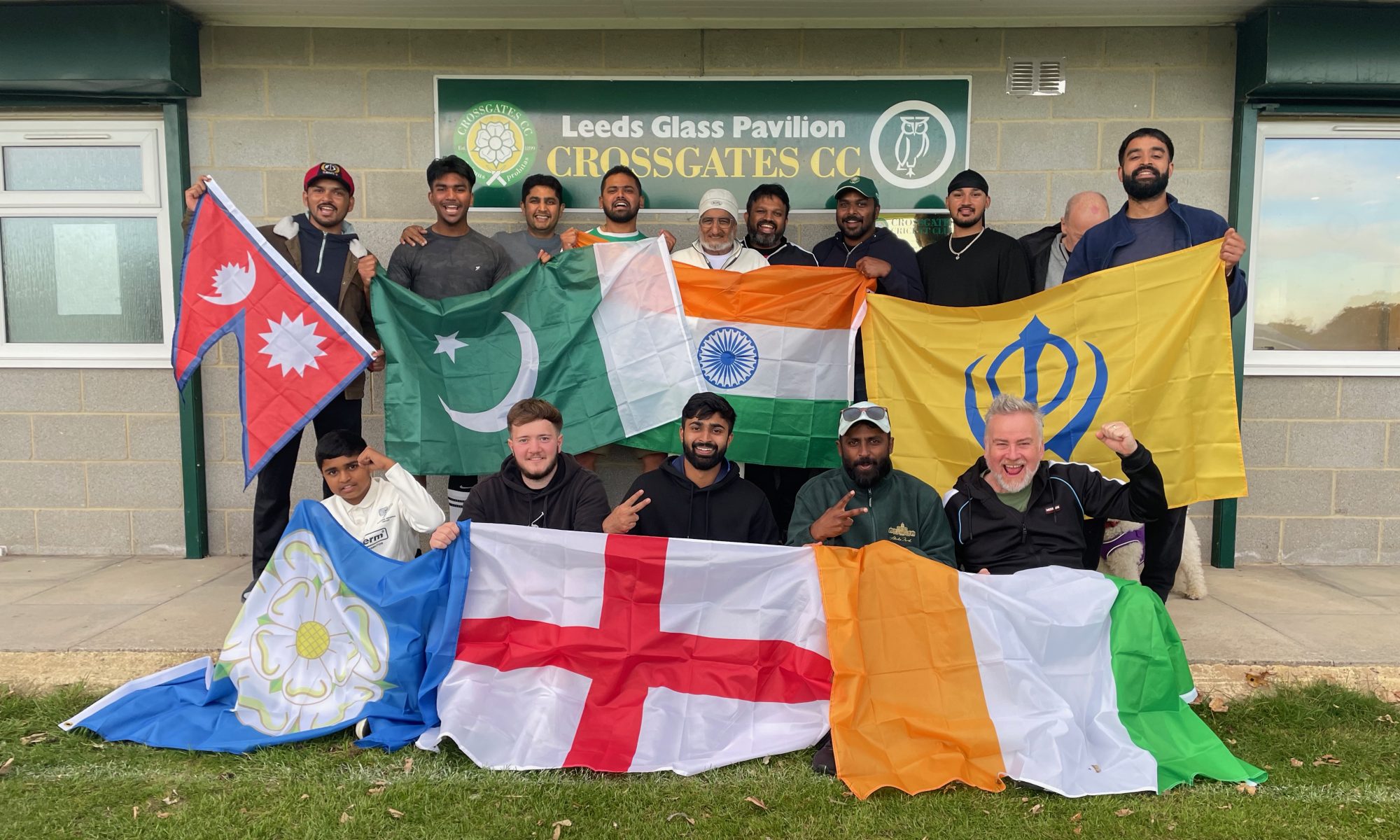

Crossgates Cricket Club Rules & Constitution
1.0 NAME
The club shall be called the Crossgates Cricket Club and will be affiliated to the Yorkshire Cricket Broad through the York Premier League North.
2.0 PREMISES
The address of the club shall be Austhorpe Lane, Crossgates, Leeds 15.
The website of the club shall be www.crossgates.co.uk.
The Facebook page shall be Crossgates Cricket Club.
The Twitter handle shall be @crossgatescc.
3.0 OBJECTIVES
To provide a safe, fun environment where people of all ages, gender, ability, race, ethnic origin, creed, colour, religion, social status, and sexual orientation in Crossgates and surrounding areas can learn, play, watch and enjoy the game of cricket.
We will achieve this through:
- Offering free qualified coaching to all our members, guests and the local community.
- Offering opportunities to play competitive cricket.
- Promoting the game of cricket.
- Tackling inactivity.
- Ensuring a duty of care to all members of the club.
- Respecting the rights, dignity and value of every person.
- Treating everyone equally within the context of their sport, regardless of age, ability, gender, race, ethnicity, religious belief, sexuality or social/economic status.
- Ensuring all present and future members receive fair and equal treatment.
- Recognising inequalities and working to address them.
- Promoting social and cultural integration through club activities and values.
The club is committed to the right for everyone to enjoy their sport in an environment free from threat of intimidation, harassment and abuse. All club members have a responsibility to oppose discriminatory behaviour and promote equality of opportunity.
The club will deal with any incidence of discriminatory behaviour appropriately, according to club disciplinary procedures.
The club will be run by volunteers on a not for profit basis.
4.0 MEMBERSHIP
All members will be subject to the rules and regulations of the club and by joining the club are accepting the constitution and the codes of conduct and discipline that the club has adopted. The club rules will be provided to the applying member when completing their membership form.
To promote inclusivity and equality of opportunity, membership of the club will be free on completion of a membership form. Membership will be defined by the following categories:
a) PLAYING MEMBERSHIP (MATCH DAY SUBSCRIPTION)
Any person wishing to play or to promote the cause of Cricket in Crossgates and surrounding areas is eligible to be a member of the club, provided they are 18 years of age or over. Playing Members are entitled to vote at Annual and Special General Meetings.
Match day membership is determined as a player paying a match fee to the Team Captain for each match played.
b) JUNIOR MEMBERSHIP
Juniors under the age of 18 shall be eligible as members of the club but will not be entitled to vote at Annual and Special General Meetings.
Junior members pay a reduced match fee to the Team Captain for each match played.
c) NON-PLAYING MEMBERSHIP
Non-playing members of the club aged 18 years or older are entitled to vote at Annual and Special General Meetings.
d) LIFE MEMBERS
The Management Committee will recommend from time to time as the occasion arises, that suitably qualified members will be elected as Life Members. Life members will have full voting rights and can only be elected at an A.G.M. Life members may be co-opted to serve on any committee or sub committee of the club or be elected an officer of the club.
The Management Committee shall have the final decision on whether an application for membership of any class is approved.
5.0 SUBSCRIPTIONS AND MATCH FEES
a) The Annual General Meeting shall determine match fees and membership subscriptions. In promoting equality of opportunity and fairness, the Management Committee at its discretion, may waive all or part thereof in respect of any member.
b) Match fees will be set at a match day rate.
c) Match fees (Adult) – It is expected that match fees are paid in advance or on the day of the match. Failure to do so would be considered a breach of club discipline and may result in action being taken under the club disciplinary policy.
d) Match fees (Junior) – It is expected that match fees are paid in advance or on the day of the match. Failure to do so would be considered a breach of club discipline and result in action being taken under the club disciplinary policy.
6.0 BANKING AND FINANCE
a) Banking accounts shall be maintained for the purpose of holding club funds. These shall be maintained with such financial institutions as the discretion of the Honorary Treasurer decides, with the proviso that authority to change financial institutions must be gained from the Management Committee. All cheques drawn on behalf of the Club shall be signed by any two of the following officials being:
Club Chairman
Club Secretary
Club Treasurer
b) The appointed trustees shall act as trustees for all the clubs’ premises and property.
c) The accounts should be made up to 31st October each year and the annual financial statement prepared to be presented at the Annual General Meeting.
7.0 TRUSTEES
a) The Trustees of the club act as signatories on the club bank account and will typically comprise of the Club Chairperson, Club Secretary and Club Treasurer. The Management Committee have the right appoint the club trustees.
b) The number of Trustees shall not be more than four or less than two and the property of the club (other than cash which shall be under the control of the Treasurer) shall be vested in them. They shall deal with the property of the club as directed by resolution of the committee (of which an entry in the Minute Book shall be conclusive evidence) and they shall be indemnified against risk and expense out of the Club property.
c) The Trustees shall hold the property of the Club as Trustees for the Club.
d) The Trustees are responsible for negotiating the lease agreement with Leeds City Council (the landlord) and will sign the agreement on behalf of the club.
8.0 MANAGEMENT
a) The club shall be managed by the Management Committee of Crossgates Cricket Club who are to be elected and/or re-elected at the Annual General Meeting.
b) The management committee shall be assisted by sub committees as deemed necessary and approved by the Management Committee.
c) The Management Committee shall consist of:
– President
– Chairperson
– Club Secretary
– Club Treasurer
– Captains & Vice-Captains
– Junior Cricket Manager
– Junior Cricket Team Managers
– Senior Cricket Team Managers
– Child Welfare Officer
– Social Events Secretary
– Sponsorship and Fundraising Secretary
– Communications Secretary
– Balance of committee
d) All officers and sub committee members shall be fully paid up members of the club. This means not being in arrears with match day subscriptions.
e) All officers shall retire each year but will be eligible for re-election at the Annual General Meeting.
f) The chairman shall have a second or casting vote only on an issue before the Management Committee which results in an equal number of votes being cast for and against. Only committee members attending in person at the Management Committee Meeting where a vote is taken are entitled to vote.
g) The Management Committee shall meet on agreed dates and times as they may determine and a quorum must be formed. A quorum shall consist of not less than five committee members. There shall be not less than 6 meetings a year. As best practice, the Management Committee should meet every month.
h) Each sub committee chairperson shall form a committee of responsible members and may co-opt members throughout the year as necessary for the benefit of the club and sub-committees.
9.0 GENERAL MEETINGS & VOTING RIGHTS
a) An Annual General Meeting shall be held no later than 30 November each year and 15 months shall not elapse without a General Meeting.
b) The Annual General Meeting shall receive a report and a statement of accounts for the previous financial year ended 31 October, elect officers, members of the management committee and all team captains for the ensuing year and transact any other business.
c) 14 days notice of the meeting shall be given to all members of an A.G.M.
d) At general meetings only Adult Playing, Non-Playing and Life members are entitled to vote.
e) Junior members and Adult members who owe the club money or are suspended (under the disciplinary policy) at the time of the meeting at the time of the meeting are not entitled to vote.
f) An Extraordinary General Meeting may be called at the request of the Management Committee and shall be called by the Secretary or, upon receipt by him/her of a written requisition signed by any 6 voting members of the club, the Secretary giving 14 days notice before the date of any such meeting.
g) The business of an Extraordinary General Meeting may be conducted by electronic mail or post where the Management Committee believes the business can be properly and fully dealt with in that way. If at least 6 voting members, on receiving such notice, inform the secretary in writing that they believe a meeting would be more appropriate the secretary shall convene a meeting giving members 14 days notice.
h) All elected officers and captains shall be elected by the A.G.M. and shall be elected on a majority vote by a show of hands and if a tie there shall be second vote by ballot.
i) Any resolution or proposed changes to the club constitution or rules put before the A.G.M. shall be passed on a majority vote and if a tie the chairman/chairwoman or his/her elected representative shall have a second and casting vote.
j) Any proposals to be considered by an annual general meeting submitted by fully paid members of the club, shall be forwarded in writing with a seconder to the management committee not later than four weeks prior to the meeting.
k) Any vote must take account of the current objectives of the club and the club constitution and rules.
l) The AGM shall be chaired by the Club President. In absentia, the President can delegate responsibility to the Club Chairman/Chairwoman.
10.0 AFFILIATIONS
The club shall be affiliated to The England & Wales Cricket Board, Yorkshire Cricket Board and York Premier League North.
11.0 CLUB COLOURS
The club colours shall be white, green and gold.
12.0 SELECTION
a) The selection committee shall be responsible for the selection of all senior teams. The selection committee will comprise of:
- 1st Team Captain (1 vote)
- 2nd Team Captain (1 vote)
- 1st Team Vice-Captain (1 vote)
- 2nd Team Vice-Captain (1 vote)
- 1st Team Manager (1 vote)
- 2nd Team Manager (1 vote)
- Club Coaches (1 vote in total – regardless of the number of coaches at the club at the time)
Note: In the event of a member of the selection committee fulfilling more than one role e.g. 1st Team Manager and Club Coach, they are still entitled to one vote only.
b) The objective of the selection committee is to select balanced teams with the intention of allowing both senior sides to compete and promoting equality of opportunity for all players to contribute in the match they have been selected to play in. Due to league rules not allowing 1st and 2nd teams to be in the same division, the 1st team should be given priority unless the Management Committee have provided different direction.
It is expected that the selection committee should discuss selection matters without prejudice and agree unanimously with each selection. Where this is not possible due to difference of opinion, a majority vote will suffice. Where there is a split vote, the Captain for the side in question has the final decision.
c) Selection meetings should take place no later than the Thursday before a weekend match. To achieve a quorum there must be 3 members of the selection committee present in the selection meeting, in person.
d) If elected members cannot attend the weekly selection committee they lose their voting right in that meeting.
e) To enable the selection committee to fulfil its role effectively, it is expected that by midnight on the Tuesday before a weekend matches ALL players who want to be considered for selection notify a member of the selection committee.
f) Once selection has been completed, the senior teams will be published and players notified by SMS message or phone call by the Captains or Vice-Captains. It is expected that players respect the selection decision as no further discussion will be entered into once selected.
13.0 MEMBERS’ CONDUCT
a) The club is committed to the right for everyone to enjoy their sport in an environment free from threat of intimidation, harassment and abuse. The club expects its members to support this commitment in their conduct and behaviours.
b) All members are expected to support the club in delivering its objectives, supporting fund raising events and social events.
c) Playing members should act within the MCC’s Spirit of Cricket which forms part of the Laws of Cricket and is documented below:
Spirit of Cricket
Cricket is a game that owes much of its unique appeal to the fact that it should be played not
only within its Laws but also within the Spirit of the Game. Any action, which is seen to abuse this spirit, causes injury to the game itself. The major responsibility for ensuring the spirit of fair play rests with the Captains.
There are two Laws that place the responsibility for a team’s conduct firmly on the Captain.
Responsibility of Captains – The Captains are responsible at all times for ensuring that play is conducted within the Spirit of the Game as well as within the Laws.
Players’ Conduct – In the event of a player failing to comply with instructions by an Umpire or criticising by word or action the decisions of an Umpire, or showing dissent, or generally behaving in a manner which might bring the game into disrepute, the Umpire concerned shall in the first place report the matter to the other Umpire and to the player’s Captain, and instruct the latter to take action.
Fair and Unfair Play
According to the Laws of Cricket the Umpires are the sole judges of fair and unfair play. The Umpires may intervene at any time and it is the responsibility of the Captain to take action where required.
The Umpires are authorised to intervene in cases of:
– Time wasting
– Damaging the pitch
– Dangerous or unfair bowling
– Tampering with ball
– Any other action that they consider to be unfair
The Spirit of the Game involves RESPECT for:
– Your opponents
– Your own Captain and team
– The role of the Umpires
– The game’s traditional values
It is against the Spirit of the Game:
– To dispute an Umpire’s decision by word action or gesture
– To direct abusive language towards an opponent or Umpire
– To indulge in cheating or any sharp practice, for instance:
(a) To appeal knowing that the batsman is not out.
(b) To advance towards the umpire in an aggressive manner when appealing.
(c) To seek to distract an opponent either verbally, or by harassment with persistent clapping,
or unnecessary noise under the guise of enthusiasm and motivation of one’s own side.
Violence
There is no place for any act of violence on the field of play.
Players
Captains and Umpires together set the tone for the conduct of a cricket match. Every player is expected to make an important contribution to this.
d) Players are expected to support the selection committee and its policies. This means but is not exclusive to; attending training sessions, notifying Captains of their availability no later than midnight every Tuesday ahead of a weekend match, accepting selection decisions as final and not withdrawing their availability to play in matches at short notice.
e) If a player announces their availability to play for the club in a round of matches, it is expected that they will play for the team they are selected for.
f) If a player does not make themselves available for the club in a round of matches, it is expected that they will not play for another club in the county of Yorkshire without the express permission of the Selection Committee to do so and must be compliant with said club’s affiliated league rules. A consequence of not following this rule could result in the player having their membership cancelled.
g) It is expected that players support club Captains, Coaches and Team Managers in the execution of their roles. Examples include, being punctual, communicating and adhering to club values, acting within the MCC Laws of Cricket including the MCC’s Spirit of Cricket.
h) Members should follow the club rules.
i) It is expected that Captains, Vice-Captains and Club Scorers are familiar with the MCC Laws of Cricket and League Playing Regulations.
j) In the event of any changes being made to MCC Laws of Cricket and League Playing regulations, Captains and Vice-Captains should familiarise themselves with the changes and communicate this to players and Club Scorers at the earliest opportunity.
14.0 DISCIPLINE
a) Discipline with regard to club members and all cricket related matters shall be the responsibility of the Management Committee.
b) The Management Committee shall have the power to suspend members for objectionable conduct pending a disciplinary investigation under the terms of the Disciplinary Policy. A member who has been suspended from the club shall not be permitted to play matches for the club or make use of the Club and its facilities whether as a guest or otherwise.
c) Disciplinary Policy
It is the policy of Crossgates Cricket Club to promote an open, friendly and positive environment which provides for the fair treatment of all members.
The disciplinary procedure is designed to ensure fair and equitable treatment for all members who become subject to disciplinary action.
All breaches of club rules or unacceptable conduct which are considered to warrant any form of disciplinary action must be dealt with through this procedure.
Disciplinary Procedure – Putting it into action
The following list provides examples of offences which may be regarded as unacceptable conduct and could therefore lead to action being taken under disciplinary procedure, this list is not intended to be exhaustive –
Theft.
Violence or threatening behaviour.
Misuse or damage of club property or equipment.
Smoking inside club property (an extension of this is property we are using as guests).
Providing or taking illegal substances on club property, or when representing the club.
Bullying.
Foul and abusive language.
Racist, sexist, homophobic or discriminatory language or behaviour.
Breaking any club rules.
Actions that undermine or could damage the reputation of the club, the league or are against the spirit of cricket.
Each situation must be judged on it’s own facts, following an investigation.
As per 14 (b), The Management Committee shall have the power to suspend members for objectionable conduct pending a disciplinary investigation under the terms of the Disciplinary Policy. A member who has been suspended from the club shall not be permitted to play matches for the club or make use of the Club and its facilities whether as a guest or otherwise.
Disciplinary Procedure – Chain of events
This procedure is expected to apply to the vast majority of “relevant disciplinary action”.
Each step must be taken without undue delay, ideally concluded within one calendar month of the commencement of step 1 in the disciplinary process.
In terms of complaints either from other members, staff or members of the general public these need to be received by email to the Club Secretary (contact details contained on the club website). The Club Secretary will forward the complaint to the Head of Disciplinary Committee.
Step 1 – Statement of grounds for action and invitation to meeting
The club must advise the member(s) involved by email or telephone of the “alleged “ incident(s) which could lead to disciplinary being taken and invite him / her to attend a meeting to discuss the matter.
Step 2 – The Initial Meeting
The meeting must take place before any action is taken, except in serious cases where it has been deemed necessary to immediately suspend the member(s).
The meeting is to be held between the member(s) involved and the Disciplinary Committee.
The Disciplinary Committee will consist of 3 appointed members:
- The Head of Disciplinary Committee (a position, elected at the Annual General Meeting).
- Two elected club officials. (excluding the Chairman and the balance of the committee)
Timings and location of meetings must be reasonable and must be conducted in a manner that enables both the club and the member to explain their cases. Where possible, the meetings will take place at Crossgates Cricket Club.
Notes of the meeting are to be taken by the Disciplinary Committee.
If the member admits the offence this should be obtained in writing at the initial meeting in form of a signed statement.
The member(s) will have the opportunity to present evidence that supports their innocence or in mitigation during this meeting.
Step 3 – Investigations
Any other corroborating evidence needs to be gathered, this can include witness statements which need to be obtained in writing, video surveillance, relevant documentation or arrest / conviction by police.
All information provided should be treated as confidential.
After investigations have concluded the disciplinary sub-committee review all evidence and reach decision as to what further action will be taken as necessary.
The Disciplinary Committee should be able to show that a genuine and reasonable belief has been formed as to the member’s guilt, or innocence.
Evidence to support this could be in the form of witness statements, notes of conversations or documentary evidence.
Where the Disciplinary Committee has formed a genuine and reasonable belief as to the member’s innocence the process reaches its conclusion and the Head of the Disciplinary Committee will advise the member(s) of the outcome of the investigation.
Step 4 – The Disciplinary Outcome
Where the Disciplinary Committee has formed a genuine and reasonable belief as to the member’s guilt, the member(s) involved will be invited to a disciplinary outcome meeting.
At this meeting the Disciplinary Committee will inform the member(s) involved of their decision, this will be confirmed in writing.
Step 5 – Right of Appeal
Every member has the right to appeal against the decision made by the Disciplinary Committee.
Any such appeal has to be received in writing by the club secretary within 48 hours of the disciplinary outcome meeting stating reasons for appeal, with supporting evidence.
An Appeal Committee, chaired by the Club Chairman and consisting of two other elected Club Officials (not in the original Disciplinary Committee will be formed within 7 days of receipt of appeal. This Appeal Committee will review the supporting evidence and then decide if the original decision was justified.
Disciplinary Procedure – Outcomes
Level 1 Warning (no suspension)
Level 2 Warning (plus a period of suspension, up to but no longer than 4 weeks)
Level 3 Warning (plus a longer period of suspension)
Expulsion from the Club
Some first actions of unacceptable behaviour may be severe enough to justify a written warning or even higher.
15.0 GUESTS
The club is family friendly and we welcome guests of our members onto the club premises. Members may introduce guests into the club premises any time and will be responsible for the conduct of their guests. Such guests shall during their visit enjoy the full rights and privileges of the members of the club, but shall be subject to the club rules.
16.0 VISITING TEAMS
Members, umpires, scorers, officials and bona-fide supporters of teams visiting the club for the purposes of playing a league matches or other matches authorised by the Management Committee may be admitted to the Club premises.
17.0 SOCIAL FUNCTIONS
The Management Committee are permitted to authorise the use of the club premises for the purpose of social functions.
18.0 COMMUNITY USE AND ACCESS
a) The club premises are open to the local community. As a club we will prioritise community groups with objectives that support equality, tackle inactivity and promote social and cultural integration. Local groups requesting to use the premises must make a request to the Management Committee who are responsible for sanctioning the use of club premises by local community groups.
b) The Club opening hours shall be determined by the Management Committee.
19.0 LIST OF MEMBERS
A list of names and addresses of all members of the club shall be maintained and governed by the club Data Security Policy and in compliance with data protection laws.
20.0 CREDIT
No credit of any kind shall be given by the club or its agents.
21.0 RULES
Each member of the club shall be provided with a copy of the club constitution and rules by which he/she/they will be bound. Copies of the club constitution and rules are available on the club website and at the clubhouse.
22.0 ALTERATION AND REVIEW OF CLUB CONSTITUTION AND RULES.
Alteration and amendment to the club constitution and rules shall not be made except at an Annual General Meeting or at an Extraordinary General Meeting. At least four weeks notice in writing of any such proposed alteration or amendment shall be given to the secretary before any such meeting and any such alteration is to be proposed and seconded.
23.0 INTERPRETATION
In the event of any question as to the interpretation of this club constitution and rules the decision of the Management Committee is final.
24.0 BYE LAWS AND REGULATIONS
The Management Committee shall have full powers to formulate and issue byelaws and regulations from time to time governing any matter not specifically covered by this club constitution and rules document and every member shall conform to them.
In the event of the Club ceasing to operate as a Cricket Club for a period of two consecutive years it shall be disbanded, and all its cash and assets shall be donated to registered charities. Such charities to be nominated by the Trustees of the Club.
25.0 NON DISTRIBUTION TO MEMBERS
The club will be run entirely by volunteers and operated on a not for profit basis. Surplus funds will be used to invest in maintaining and improve the club’s facilities and in delivering the club objectives.
26.0 SAFEGUARDING POLICY
Crossgates Cricket Club: Safeguarding Policy Statement
Crossgates Cricket Club provides a self and welcoming environment to enjoy playing cricket. We seek to provide this environment to people regardless of:
- Age
- Ethnicity
- Gender
- Sexual orientation
- Disability
This environment is promoted and maintained by the Club Committee who will ensure the active fulfilment of club policies on:
- A code of conduct for players, members and guests.
- Coaches code of practice.
- Diversity policy.
- Anti-bullying policy.
- Changing room policy.
- Club Policy on Photography, Filming and Social Media Broadcast
- Transport policy.
- Whistleblowing policy.
Crossgates Cricket Club Players, Members and Guests Code of Conduct
All Members and Guests of Crossgates Cricket Club will:
- Respect the rights, dignity and worth of every person within the context of cricket
- Treat everyone equally and not discriminate on the grounds of age, gender, disability, race, ethnic origin, nationality, colour, parental or marital status, religious belief, class or social background, sexual preference or political belief
- Not condone, or allow to go unchallenged, any form of discrimination if witnessed
- Display high standards of behaviour
- Promote the positive aspects of cricket, for example fair play
- Encourage all participants to learn the Laws and rules and play within them, always respecting the decisions of match officials
- Actively discourage unfair play, rule violations and arguing with match officials
- Recognise good performance not just match results
- Place the well-being and safety of children above the development of performance
- Ensure activities are appropriate for the age, maturity, experience and ability of the individual
- Respect children’s opinions when making decisions about their participation in cricket
- Not smoke, drink or use banned substances while working with children in the club
- Not provide children with alcohol when they are under the care of the club
- Follow ECB guidelines set out in the “Safe Hands – Cricket’s Policy for Safeguarding Children” and any other relevant guidelines issued
- Report any concerns in relation to a child, following reporting procedures laid down by the ECB
Members and guests include all members and officers of the cricket club and all guests of those members and officers, as well as all individuals who watch/attend/participate/ officiate in matches hosted by the club in whatever capacity
Crossgates Cricket Club Coaches Code of Practice
Crossgates cricket coaches:
- must not engage in behaviour that constitutes any form of abuse (physical, sexual, emotional, neglect, bullying)
- should promote the welfare and best interests of their players
- must avoid sexual intimacy with players, either while coaching them or in the period of time immediately following the end of the coaching relationship
- must take action if they have a concern about the behaviour of an adult towards a child
- should empower players to be responsible for their own decisions
- should clarify the nature of the coaching services being offered to players
- should communicate and cooperate with other organisations and individuals in the best interests of players.
- Be aware of the physical needs of players, especially those still growing, and ensure that training loads and intensities are appropriate.
- Ensure that physical contact is appropriate and necessary, and is carried out within recommended guidelines with the player’s full consent and approval.
- Do not engage in any form of sexually related contact with an under age player. This is strictly forbidden as is sexual innuendo, flirting or inappropriate gestures and terms.
- Inform parents or guardians immediately if you are at all concerned about the welfare of a child.
- Discuss with parents and other interested parties the potential impact of the programme on the player.
- Arrange to transfer a player to another cricket coach if it is clear that an intimate relationship is developing.
- Know and understand the relevant ECB or employer policies and procedures in this regard.
- Follow the reporting procedures laid down by ECB or your employer if you have a concern – non-action is unacceptable.
- Respect players’ opinions when making decisions about their participation in cricket.
- Encourage players to take responsibility for their own development and actions.
- Allow players to discuss and participate in the decision-making process.
- Discuss and agree with players what information is confidential.
- Inform players or their parents of the requirements of cricket.
- Inform players or their parents of any potential costs involved in accessing the coaching services on offer.
- Be aware of and communicate on any conflict of interest as soon as it becomes apparent.
- Do not work with any other cricket coach’s player without first discussing or agreeing it with both the coach and the player involved.
- Identify and agree with players which other experts or organisations could offer appropriate services.
- assist in the creation of an environment where every individual has the opportunity to participate in cricket
- create and maintain an environment free of fear and harassment
- recognise the rights of all players to be treated as individuals
- recognise the rights of players to confer with other cricket coaches and experts
- promote the concept of a balanced lifestyle, supporting the well-being of the player both in and out of cricket.
- Treat all individuals in cricket with respect at all times.
- Do not discriminate on the grounds of gender, marital status, race, colour, disability, sexuality, age, occupation, religion or political opinion.
- Do not condone or allow to go unchallenged any form of discrimination.
- Do not publicly criticise or engage in demeaning descriptions of others.
- Be discreet in any conversations about players, cricket coaches or any other individuals.
- Communicate with and provide feedback to players in a manner that reflects respect and care.
- must be fair, honest and considerate to players and others in cricket
- should project an image of health, cleanliness and functional efficiency
- must be positive role models for players at all times.
- Operate within the rules and the spirit of cricket.
- Educate players on issues relating to the use of performance-enhancing drugs in cricket and co-operate fully with UK Sport and ECB policies.
- Maintain the same level of interest and support when a player is sick or injured.
- Display high standards in use of language, manner, punctuality, preparation and presentation.
- Encourage players to display the same qualities.
- Do not smoke, drink alcohol or use recreational drugs before or while coaching. This reflects a negative image and could compromise the safety of your players.
- Display control, respect, dignity and professionalism to all involved in cricket.
- ensure the environment is as safe as possible, taking into account and minimising possible risks
- promote the execution of safe and correct practice
- be professional and accept responsibility for their actions
- make a commitment to providing a quality service to their players
- actively promote the positive benefits to society of participation in cricket
- contribute to the development of cricket coaching as a profession by exchanging knowledge and ideas with others
- gain ECB coaching qualifications appropriate to the level at which they coach cricket.
- Follow the guidelines of the ECB
- Only allow participation if there is no risk to the player.
- Plan all sessions so they meet the needs of the players and are progressive and appropriate.
- Maintain appropriate records of your players.
- Recognise and accept when it is appropriate to refer a player to another cricket coach or specialist.
- Seek to achieve the highest level of qualification available.
- Attend continuing professional development (CPD) to maintain up-to-date knowledge of technical developments in cricket.
- Attend CPD to maintain up-to-date knowledge and understanding of other issues that might impact on both you and your players.
- Be aware of the social issues and how cricket can contribute to local, regional or national initiatives.
- Actively participate in recruitment and education opportunities in cricket.
- Actively contribute to local, regional and national initiatives to improve the standards and quality of cricket coaching both in cricket and sport in general.
- Practise in an open and transparent fashion that encourages other cricket coaches to contribute to or learn from your knowledge and experience.
- Engage in self-analysis and reflection to identify your professional needs.
- Seek CPD opportunities to develop your cricket coaching skills and update your knowledge.
- Manage your lifestyle and cricket coaching commitments to avoid burnout that might impair your performance.
- Do not assume responsibility for any role for which you are not qualified or prepared.
- Do not misrepresent your level of qualification
Crossgates Cricket Club Diversity Policy:
Crossgates Cricket Club in all its activities, is fully committed to the principles of equality of opportunity in cricket, and to ensuring that its members and all other individuals working or volunteering for Crossgates Cricket Club, and participating in or watching Crossgates Cricket Club’s activities are treated fairly and are able to conduct their activities free from discrimination, harassment or intimidation.
The club in all its activities will not discriminate, or in any way treat anyone less favourably against on the grounds of age, gender, disability, race, parental or marital status, pregnancy, religion or belief or sexual orientation.
Crossgates Cricket Club will not tolerate harassment, bullying, abuse or victimisation of individuals
Crossgates Cricket Club will endeavour to create access and opportunities for all those individuals who wish to participate, and are lawfully eligible to participate, in its activities.
Crossgates Cricket Club will ensure that it complies with the requirements of the Equality Act 2010 and shall take all reasonable steps to ensure that its members and volunteers adhere to these requirements and this policy.
This policy is fully supported by the Crossgates Cricket Club’s officers and [management committee] who are responsible for the implementation of this policy.
Crossgates Cricket Club is committed to the investigation of any claims when brought to its attention, of discrimination, harassment, bullying, abuse or victimisation of an individual, and reserves the right to impose such sanction as it considers appropriate and proportionate, where such is found to be the case.
In the event that any member, volunteer, participant or spectator feels that they have suffered discrimination, harassment, bullying, abuse or victimisation, they should report the matter in writing to Alex Smickersgill, Safeguarding Officer or Andrew Swallow, Secretary of Crossgates Cricket Club.
Any such report should include: details of what occurred; when and where the occurrence took place; any witness details and copies of any witness statements.
The Disciplinary sub-committee of the club management committee:
- may decide (at its sole discretion) to uphold or dismiss the complaint without holding a hearing
- may (at its sole discretion) hold a hearing at which both parties will be entitled to attend and present their case;
- will have the power to impose any one or more of the following sanctions on any person found to be in breach of any policy: (a) warn as to future conduct; (b) suspend from membership; (c) remove from membership; (d) exclude a non-member from the facility, either temporarily or permanently; and (e) turn down a non-member’s current and/or future membership application; and will provide both parties with written reasons for its decision.
- A party may appeal a decision of the to the Yorkshire County Cricket board by writing to the Yorkshire County Cricket Board within 3 months of Crossgates Cricket Club ’s decision being notified to that party.
- If the nature of the complaint is with regard to the management committee of the Crossgates Cricket Club the complainant may report the complaint directly to the relevant County Cricket Board.
Crossgates Cricket Club Anti Bullying Policy
Crossgates Cricket Club are committed to providing a caring, friendly and safe environment for all of our children so they can train, and play, in a relaxed and secure atmosphere. Bullying of any kind is unaccep8table at our club. If bullying does occur, all children should be able to tell, and know, incidents will be dealt with promptly and effectively. We are a TELLING club. This means anyone who knows bullying is happening is expected to tell someone who can do something about it.
What is bullying? Bullying is the use of aggression with the intention of hurting another person. Bullying results in pain and distress to the victim. Bullying can take many forms :
- Emotional: being unfriendly, excluding, tormenting (for example: hiding kit, or making threatening gestures)
- Physical: pushing, kicking, hitting, punching or any use of violence
- Racist: racial taunts, graffiti and/or gestures
- Sexual: unwanted physical contact or sexually abusive comments
- Homophobic: because of, or focusing on, the issue of sexuality
- Verbal: name-calling, sarcasm, spreading rumours and teasing
- Cyber: bullying behaviour online or via electronic communication (email and text, social media etc) Misuse of associated technology, such as camera and video facilities.
Bullying hurts. No one should be a victim of bullying. Everyone has the right to be treated with respect. Children who are bullying also need to learn different ways of behaving. Cricket clubs have a responsibility to respond promptly, and effectively, to issues of bullying.
Objectives of this policy:
- All adults and children at the club should have an understanding of what bullying is
- All officials, coaching and non-coaching staff should know what the club policy is on bullying, and follow it when bullying is reported
- All children and parents should know what the club policy is on bullying, and what they should do if bullying arises
- As a club, we take bullying seriously. Children and parents should be assured they will be supported when bullying is reported
- Bullying will not be tolerated. In cases of adults reported to be bullying cricketers under 18, the ECB must always be informed.
Signs and symptoms:
A child may indicate, by signs or behaviour, that he or she is being bullied. Adults should be aware of signs and investigate if a child:
- Says they are being bullied
- Changes their usual routine
- Is unwilling to go to the club
- Becomes withdrawn anxious, or lacking in confidence
- Comes home with clothes torn or belongings damaged
- Has possessions which are damaged or go missing
- Asks for money or starts stealing money (to pay the bully)
- Has unexplained cuts or bruises
- Is frightened to say what’s wrong
- Gives improbable excuses for any of the above In more extreme cases, the child:
- Starts stammering
- Cries themselves to sleep at night or has nightmares
- Becomes aggressive, disruptive or unreasonable
- Is bullying other children or siblings
- Stops eating
- Attempts or threatens suicide or runs away.
These signs and behaviours could indicate other problems, but bullying is a possibility and should be investigated.
Procedures:
- Report any concerns about bullying incidents to the Club Safeguarding Officer (Alex Smickersgill)
- In cases of serious bullying, the incidents will be reported to the ECB Safeguarding Team for advice via the County Welfare Officer
- Parents should be informed and invited to a meeting to discuss the problem
- If necessary, and appropriate, police should be consulted – for example if there has been assault, harassment or theft
- The bullying behaviour or threats of bullying must be investigated and the bullying stopped quickly
- An attempt will be made to help the bully (bullies) change their behaviour In cases of adults reported to be bullying cricketers under 18, the ECB must always be informed Prevention
Crossgates Cricket Club Changing Room Policy.
Crossgates Cricket Club applies the following rules as regards changing room facilities:
- Adults must not change, or shower, at the same time using the same facility as children. –
- If adults and children need to share a changing facility, they must do so at different times.
- Mixed gender teams must have access to separate male and female changing rooms
- Due to the risks of inappropriate photography or filming, mobile phones must not be used in changing rooms.
If children are uncomfortable changing or showering at the club, no pressure should be placed on them too so. The club suggest instead that they may change and shower at home.
Crossgates Cricket Club Policy on Photography, Filming and Social Media Broadcast
The guiding principles of Crossgates Cricket Club policy are:
- Photographs/images are not to be taken at matches or training without the prior permission of the parents/carers of the child. This permission can be given by proxy by the coach of each team only after parental consent for this has been granted. The coach must arrange this prior to attending matches
- If no consent has been given for a child , then it is to be made known to the relevant person of the other team (e.g. coach/ team manager) so the appropriate person/s taking photographs for the other team is/are aware and can avoid taking photographs of that particular child
- The children should be informed a person will be taking photographs
- The children should be informed that if they have concerns they can report these to the coach or team manager
- Concerns regarding inappropriate, or intrusive, photography should be reported to the Club Safeguarding Officer (Alex Smickersgill) and recorded in the same manner as any other child protection or safeguarding concern
- It is recommended that cricket tournaments/festivals/events/competitions set up a camera registration book for parents to complete It is recommended that all cricket clubs as well as tournament/festival/event organisers adhere to the appropriate guidelines relating to publishing of images as detailed below.
- Use of images of children (for example on the web, in the media or in league handbooks), including broadcast on social media platforms:
- Ask for parental permission to use the child’s image and, wherever possible, show the image to the parents and child in advance. This ensures that they are aware of the way the image will be used to represent cricket and the club
- Ask for the child’s permission to use their image. This ensures they are aware of the way the image is to be used to represent cricket and the club
- If the cricketer is named, avoid using their photograph
- If a photograph is used, avoid naming the child
- Only use images of children in appropriate kit, to reduce the risk of inappropriate use, and to provide positive images of the children
- Encourage the reporting of inappropriate use of images of children. If you are concerned, report your concerns to the County or Club Welfare Officer Using video as a coaching aid: There is no intention on the part of the ECB to prevent club coaches using video equipment as a legitimate coaching aid. However, players and parents/carers should be aware that this is part of the coaching programme, and material taken in connection with coaching, must be stored securely and deleted or destroyed when a parent requests this, or when the material is no longer needed. The parents/carers and children must provide written consent for the use of photography and video analysis.
Crossgates Cricket Club Policy on the use of Social Media, texts, apps, email and messaging services
The Children Act defines a person under 18 years as a child. Crossgates Cricket Club will make arrangements for under 18s via their parents or carers; this includes text and email or Whats App messages etc. An acceptable exception to this rule is to text or email the parent and to copy in the 16 or 17 year old, with the parent’s prior consent. This means the parent is able to monitor communications, but the 16 or 17 year old receives the information directly.
If Crossgates Cricket Club receive any responses that appear inappropriate they should be brought to the attention of the parent or carer.
Crossgates Cricket Club will not engage in individual text or email conversations with a 16 or 17 year old without their parent receiving the same messages from you.
All contact with children wil be in relation to coaching, matches and cricket-related activity.
Social Media:
- Coaches / Managers / Club members must have separate social media accounts for cricket-club related and personal use. They must keep their photos and personal information private.
- All club members must apply the Codes of Conduct and appropriate professionalism to your behaviour online, by text and email.
- They must obtain consent before posting any personal information online – this includes photographs where an individual can be identified.
- No picture or name guidance should be taken for under 18s
- Coaches / Managers / Club members must not:
- Send text messages to juniors – they must make arrangements via their parents.
- Send private messages to children and young people via apps or social media.
- Invite or accept children and young people to become “friends”.
- Send inappropriate text messages or post messages on social media that are offensive, nasty or derogatory in any way.
- Adult players will be mindful of who may have access to material you share via social media, including Facebook, twitter and other platforms.
Concerns regarding social media, texts and emails:
- Anyone who suspects that someone is using social media in an unsafe or inappropriate manner, should report the behaviour to your Club Safeguarding Officer (Alex Smickersgill), the County Safeguarding Officer, or the ECB Safeguarding team – email safeguarding@ecb.co.uk.
- Anyone who believes that an offence has been committed, or that someone’s use of social media is placing a child is at risk of harm, inform the police immediately.
Crossgates Cricket Club Transport Policy
The club must have a policy on transporting children to and from matches and training. All clubs must ensure they have notified parents/ carers that parents/carers are responsible for the safe delivery and collection of their child for matches or training. It is advisable that at the annual start of year or season meeting, information is distributed which relates to all planned away fixtures or competitions to provide parents/carers with an opportunity to make appropriate arrangements. See Sample welcome letter for parents / carers Coaches and club staff will be responsible for children in their care when on the club premises or on arrival at opponents’ cricket grounds. It is not the responsibility of the coach or team manager to transport, or arrange to transport, the children to and from the club or match. The club must receive permission from parents/carers for children to participate in all competitions and away fixtures/ events. It is advisable for clubs to also establish with parents/carers a “pick up and drop off” policy, which specifically addresses matters such as late collection of children. Developing this policy at the start of season meeting will provide an opportunity to establish both club and parental expectations and will provide club officials with guidance should an incident arise during the season
Crossgates Cricket Club Whistle Blowing Policy
Crossgates Cricket Club follows the ECB Whistle Blowing Policy. The clubis committed to maintaining a culture where it is safe, and acceptable, for all those involved in cricket to raise concerns about unacceptable practice and misconduct. You may be the first to recognise something is wrong but you may not feel able to express your concerns out of a belief that this would be disloyal to colleagues, or you may fear harassment, victimisation or disadvantage. These feelings, however natural, must never result in a child continuing to be unnecessarily at risk. Remember, it is often the most vulnerable children who are targeted.
Those involved in the sport must acknowledge their individual responsibilities to bring matters of concern to the attention of the relevant people. and/or agencies. Although this can be difficult, it is particularly important where the welfare of children may be at risk. The ECB assures all involved in cricket that they will be treated fairly and that all concerns will be properly considered. In cases where the suspicions prove to be unfounded, no action will be taken against those who report their suspicions/ allegations, provided they acted in good faith and without malicious intent.
The Public Interest Disclosure Act 1998 protects whistle blowers from victimisation, discipline or dismissal where they raise genuine concerns of misconduct or malpractice.
Each individual has a responsibility for raising concerns about unacceptable practice or behaviour:
- To prevent the problem worsening or widening
- To protect or reduce risk to others
- To prevent becoming implicated yourself
What stops people from sharing concerns (whistle blowing?)
- Fear of starting a chain of events
- Reluctance to disrupt work or training
- Fear of getting it wrong
- Fear of repercussions or damaging careers
- Fear of not being believed
What happens next?
- You should be given relevant information on the nature and progress of enquiries
- All concerns will be treated in confidence. During the process of investigating the matter, every effort will be made to keep the identity of those raising the concern unknown, except to the minimum number of individuals practicable
- Your Club Safeguarding Officer, County Safeguarding Officer and the ECB have a responsibility to protect you from harassment or victimisation
- No action will be taken against you if the concern proves to be unfounded and was raised in good faith
- Malicious allegations may be considered a disciplinary offence
Should suspicions be raised via a “tip off”, the person receiving the tip off should attempt to obtain the following information from the informant:
- Name address and telephone number
- Names of individuals involved
- The manner of the alleged incident/s or circumstances
- Whether they will submit any evidence (if applicable)
- How they became aware of the nature of the allegation
You should not attempt to deal with any allegation or suspicion yourself, rather inform your Club Welfare Officer or your County Welfare Officer or the ECB Safeguarding Team. Specifically do not:
- Inform the person about whom the concern was raised
- Inform any other members, participants or employees
- Commence your own investigation
- Annotate or remove evidence
- Delay in reporting the suspicion
NEVER assume:
- “All is well, otherwise it would have been spotted earlier”
- “It doesn’t matter” or “no harm will arise”
- “Ignore it as it is not my responsibility”
- “Someone else must have reported it already”
The first person you should report your suspicion or allegation to is your Club Safeguarding Officer (Alex Smickersgill). If for any reason you cannot, or do not wish to report the matter to your Club Welfare Officer, you should refer to your County Safeguarding Officer (Ray Knowles) If you cannot, or do not wish to, report the information to either of these, then please contact the ECB Safeguarding Team by email on safeguarding@ecb.co.uk or telephone 020 7432 1200. Alternatively you can also contact Public Concern at Work on 020 7404 6609 or whistle@pcaw.org.uk Feedback
The amount of feedback relating to the issue will vary depending on the nature and result of the investigations. However, where possible, those who have raised concerns will be kept informed of the progress and conclusion of investigations, although they may not be informed of the detail unless they would need this information in order to safeguard children.
27.0 DATA SECURITY POLICY
Crossgates Cricket Club
A Data Privacy Statement (and data security policy)
Contents / Sections:
- Learning about Crossgates CC
- Booking Crossgates CC facilities
- Information obtained from third party sources
- How we use personal information
- Sharing and disclosure
- How to access and control your personal information
- Cookie use
- Advertising and marketing practices
- Security
- Other important privacy information
- How to contact us
- FAQ
- Download a pdf of this policy (link to a PDF of this document)
We respect your privacy and your rights to control your personal data. Our principle guidelines are simple; we will be clear about the data we collect and why. Your data is protected by us; {we do not and will not sell your data to third parties.}
This Privacy Statement (the ‘Statement’) explains the personal information we collect from you, either directly or indirectly, and how we will use it. The Statement also covers the choices you can make about the data we collect, and how you can control these choices. It applies to all the services our club offers and any bookings you may make with us. It also applies to any Crossgates CC controlled websites, as well as other offline interactions {such as attending a Crossgates CC event} (collectively referred to as, ‘Services’).
STRUCTURE OF CROSSGATES CC
Crossgates CC is a not-for-profit organisation run by volunteers. But we are still obliged to run the club in a legal and fair way for our players, guests and the wider community who interact with our club.
Please read this Statement carefully to understand when you may provide personal information to us and how Crossgates CC uses personal information provided. By interacting with Crossgates CC you agree that we may need to use your personal information as described in this Statement. The terms ‘we’, ‘us’, or [‘Club’] are each intended as reference to Crossgates CC.
To make the information in this Statement easy to understand, it is structured to highlight different occasions when you would potentially share information with Crossgates CC. It is broken down into the following segments:
- {Learning about Crossgates CC}
- {Booking Crossgates CC facilities}
- {Attending Crossgates CC events}
- {Getting help from Crossgates CC}
Additional sections give more detail about {How We Use Personal Information, Sharing and Disclosure, How to Access and Control Your Personal Information, Other Important Privacy Information, and How to Contact Us regarding your information.}
Learning about Crossgates CC
As you gather more information about Crossgates CC, you may virtually or physically visit a site that we own. Examples include {browsing our website, making a private booking of our pavilion or ground facilities and/or attending an event or visiting Crossgates Cricket Club or attending Crossgates CC-sponsored events.} To learn more about us, you may voluntarily provide personal information, such as {your name and email address or phone number} during these interactions. You may also provide information online via cookies when you visit our websites.
We may collect: {name, email address, IP address, phone number and information provided by cookies or similar technology in order to personalise the services we offer you.}
Why: We use this information to {share news about events offered by Crossgates CC. Additionally, the IP address helps us to understand geographic information about our website visitors better so that we can improve and personalise our website for everyone.}
Booking Crossgates CC facilities or attending events
Once you have decided to book a Crossgates CC facility or event, we may in the future offer a way for you to book directly with us {at http://www.crossgatescc.co.uk.} When you book from us, you may be asked to provide information so that we can complete your booking. Information may include things {like your name, phone number, email and payment information.}
We collect: {your name, phone number (optional), email address, personal address, and payment information.}
Why: We use this information to {complete your transaction or booking and to follow up with you about your booking or other issues related to the interaction with Crossgates CC.}
Please note: {We do not store any payment information. We only use payment information in connection with the booking of Crossgates CC facilities.}
Using Crossgates CC facilities
There are three main reasons we collect information: {(1) to offer you relevant service choices, (2) to offer you control over your Crossgates CC booking and (3) to make your Crossgates CC bookings better over time.}
EXAMPLE:
Functional Data:
Certain categories of the data that we collect are absolutely necessary for your Crossgates CC booking to perform basic functions in a secure way and you will not be able to opt out from this data collection, sharing and/or processing and we are allowed to do this in law (“Functional Data”).
We collect:
- Booking data. This data includes your {email address, location, address, phone number (optional), payment details or Crossgates CC account login information (should that be offered in the future}
- Functional Data: We collect this information to help ensure that your booking is delivered to you as expected, to provide you with customer support, to honour your preferences, and confirm your booking and payment.
Information obtained from third-party sources
We protect data obtained from third parties according to the practices described in this Statement and we also apply any additional restrictions imposed by the source of data. These third-party sources vary over time, but have so far included:
- Service partners or sponsors;
- Partners with whom we offer co-branded services or engage in joint marketing activities.
How We Use Personal Information
Crossgates CC uses the data we collect to provide you with services you have requested which may include using your data to improve and personalise your experiences. We also use the data to communicate with you, for example, informing you about your booking, future events or new services available, security and other types of updates.
Crossgates CC uses the data for the following purposes:
- Providing our facility booking
- Product Improvement
- Security, Safety, and Dispute Resolution
- Business Operations
- Communication, Marketing and Advertising}
Security, Safety, and Dispute Resolution
We use data to protect the security and safety of our customers, to detect and prevent fraud, to resolve disputes and to deliver our agreements.
Business Operations
We may use data to develop business intelligence that enable us to operate, protect, make informed decisions, and report on the performance of our club.
Communication, Marketing and Advertising
We use the data we collect to deliver and personalise our communications with you. For example, we may contact you by email or other means of electronic communication to inform you about new services available, update you on a support issue, invite you to take part in a survey. We may also use cookies and similar technologies to provide the most relevant marketing for you.} Each communication we send out will contain an opportunity to unsubscribe from future emails and to stop using your personal information.
Sharing and Disclosure
Crossgates CC does not and will not ever sell, rent or share your personal information, ever.
EXAMPLE:
Who We May Disclose your Personal Information to and Why
- Third Party Vendors. Crossgates CC may use a third party vendor to carry out services like website management and hosting, online purchases and shipping, credit card processing and email communications. We only share your personal data as necessary.} To complete a transaction, provide a Product or Service you have requested or authorised and only with vendors or agents working on our behalf for the purposes described in this Statement. In this case, your personal information will be shared with these agents or contractors but only for the purpose of performing services on behalf of Crossgates CC and in accordance with this Statement. The up-to-date list of these parties may be requested from Crossgates CC at any time.
- Parties with whom it might be necessary, when we reasonably believe it to be required by law or in connection with legal proceedings; {to prevent harm to Crossgates CC or its players, guests, customers; for the prevention and detection of crime or the apprehension or prosecution of offenders; to maintain the security of our Products or to protect the rights or property of Crossgates CC.}
How to Access and Control Your Personal Information
You can request to review, edit or delete your personal data {by contacting us directly at data@crossgatescc.co.uk.}
You can always opt out of receiving promotional emails and other types of marketing communication from us each time you receive them.
Your Communication, Marketing and Advertising Preferences
You can opt out of receiving certain direct communications from Crossgates CC at any time you wish. If you wish to stop receiving emails from us, you can do so by following the instructions included in every email sent to you via the “Unsubscribe” link. We respect your choice, and we will stop sending you promotional emails once you unsubscribe. {It may take up to one month to process your request.}. However, we will still send you emails relevant to the delivery of your product or service or booking as part of our transaction with you as this will still be necessary to keep you informed if you so wish.
And, we will continue to communicate with you on issues relating directly to your booking, or changes to a booking or request you have made of us.
Cookies and Other Similar Technologies
We may use cookies and similar technologies to help us, personalise our website for you, remember your preferences, understand how users are using our website or app, and help customise our marketing offerings. By{visiting our website at http://www.crossgatescc.co.uk,} you agree to the use of cookies and similar technologies for the purposes described in this Statement or you can change your cookie preferences via your own internet service provider.
Cookies
A ‘cookie’ is a very small data file containing a string of characters that is sent to your computer when you visit a website. When you visit the website again, the cookie allows that site to recognise your browser. The length of time a cookie will stay on your computer or mobile device depends on whether it is a “persistent” or “session” cookie. {Crossgates CC uses both types of cookie.} Session cookies will only stay on your device until you stop browsing. Persistent cookies stay on your computer or mobile device until they expire or are deleted. {We use the following types of cookies on our website.}
- Strictly necessary cookies. These cookies are essential for you to browse our website and use its features. Without these cookies, services like shopping baskets cannot be provided.
- Performance upped cookies. These cookies collect information about how you use our websites. This data may be used to help optimise our website and make it easier for you to navigate.
- Functional cookies. These cookies allow our websites to remember you when visiting us and will remember the choices you make and personalise your experience. We may store your geographic location in a cookie {for instance, to ensure that we show you the website relevant to your area.}
- Third Party cookies. Third party cookies are those placed by websites and/or parties. These cookies may be used on our website to improve our products or services or to help us provide more relevant advertising. These cookies are subject to the respective privacy policies for these external services, for example, the Facebook Data Use Policy.
- Analytics cookies. We use analytics cookies, like those offered by Google Analytics, to help us understand things like how long a visitor stays on our website, what pages they find most useful, and how they arrived it. To learn more about Google Analytics and your data, visit this Google webpage.
How to control cookie settings
Most web browsers allow you to control cookies through their settings preferences, however if you limit the ability of websites to set cookies, you may impact your overall user experience. Below you can learn about how to control cookie settings on popular web browsers:
Pixels
{In addition to cookies, we sometimes use small graphic images known as ‘pixels’ (also known as web beacons, clear GIFs, or pixel tags). We use pixels in our email communications to you (if you have selected to receive such communications) to help us to understand whether our email communication has been viewed. We also use third party pixels (such as those from Google, Facebook, and other advertising networks) to help us provide advertising that is relevant to your interests. Learn more about our advertising and marketing activities below.}
How to control Identifier Settings
You can control how these identifiers are used, including the ability to reset them, through your device settings. Below you can learn about how to control cookie settings on popular web browsers:
Advertising and Modern Marketing Tools
Crossgates CC may work with third party advertisers or sponsors that use cookies and similar technologies to provide more relevant advertising about our bookings or facilities on our website and across the internet. To provide this ‘interest-based advertising’, the parties combine non-personal data about your online activities acquired over time which helps cater advertising that we deliver to you. Examples of this may include an advertisement on a Facebook page, or a Google owned page such as a search results page or YouTube, or on a site within Google’s advertising network. We do not share your personal information as part of this process. You can opt-out of these personalised ads from third party advertisers and ad networks who are members of the Network Advertising Initiative (NAI) or who follow the Digital Advertising Alliance’s Self-Regulatory Principles for Online Behavioural Advertising by visiting the opt-out pages on the NAI website and DAA website. Opting out may make the ads you see across the internet less relevant to you.
If you have opted out of receiving communications from us, we will not use your email for interest based advertising, although you may still be subject to certain interest based advertising depending upon your browser and device settings.
Security
Crossgates CC is committed to protecting the security of your personal data. We use a variety of security technologies and procedures to help protect your personal data from unauthorised access, use or disclosure. For example, we store the personal data you provide on computer systems that have limited access and are in controlled facilities.
While no Service is completely secure, Crossgates CC takes precautionary measures to help prevent information about you from loss, theft, misuse and unauthorised access, disclosure, alteration and destruction. For example, we ensure that our third-party data centre vendors provide adequate security measures. Your personal information is stored on servers that are kept in a controlled environment with limited access. While we take reasonable precautions to guard personal information we collect from you, no security system is impenetrable.
Other Important Privacy Information
Our Child Safeguarding Policy can be found in section 26.0
Where We Store and Process Personal Data
Personal data collected by us may be stored and processed securely where Crossgates CC make a booking on your behalf.
Our Retention of Personal Data
Crossgates CC retains personal data for only as long as necessary to provide Services, support your booking and to fulfil the transactions you have requested, or for other essential purposes such as complying with our legal obligations, and resolving disputes and enforcing our agreements. Because these needs can vary for different data types in the context of different Products or Services, actual retention periods can vary significantly.
Changes to Our Privacy Statement
Crossgates CC may modify or update this Statement when necessary to reflect customer feedback and changes in our service offering; so, please review it regularly.
How to Contact Us
If you have any questions about the use of your personal information, please send us an email to {data@crossgatescc.co.uk.}
Unless otherwise stated, Crossgates CC is a data {controller / processor} for personal data we collect through the services we offer subject to this Statement. Our address is:
Crossgates Cricket Club,
The Pavilion,
Austhorpe Lane,
Crossgates
LS15 8LY
Our Data Protection officer is:
John McDermott DipM MCIM,
Chartered Marketer
who can be contacted on data@crossgatescc.co.uk
28.0 ROLE PROFILES
PRESIDENT
ROLE
Acting as an ambassador for the club to support its strategic objectives.
TASKS
- Chairing the Annual General Meeting.
- Acting as an arbiter and mediator where there is a dispute in the Management Committee.
- Holding club officials to account.
- Challenging policies and actions taken by the Management Committee that are not aligned to club objectives and the ECB Child Safeguarding Policy.
The above list of tasks is not exclusive or exhaustive and the post holder will be required to undertake such tasks as may reasonably be expected within the scope of the role.
CHAIRMAN/CHAIRWOMAN
ROLE
Lead the club and provide strategic direction to take the Club forward
TASKS
• Chair the monthly Management Committee meetings
• Motivate others in a coordinated and progressive way
• Represent the club on formal occasions and to external bodies
• Ensure the Governing Committee members discharge their responsibilities in line with their role descriptions
The above list of tasks is not exclusive or exhaustive and the post holder will be required to undertake such tasks as may reasonably be expected within the scope of the role.
CLUB SECRETARY
ROLE
To ensure the smooth running of the club’s administrative requirements
TASKS
• Deal with the day to day running of the club including all incoming and outgoing correspondence.
• Maintain files of all club documents securely and compliantly.
• Call committee & club meetings and AGM as detailed in the club constitution as well as preparing the agenda, attending and take minutes for all meetings.
• Represent the club on formal occasions and to external bodies.
• Respond to external requests for club information.
The above list of tasks is not exclusive or exhaustive and the post holder will be required to undertake such tasks as may reasonably be expected within the scope of the role.
CLUB TREASURER
ROLE
Oversee the financial running of the club, maintaining accurate and up to date financial records.
TASKS
• Attend monthly Governing meetings & AGM and report on the financial status of the club
• Ensure that all club funds are spent appropriately
• Prepare and present the annual club accounts at the AGM
• Establish and maintain club banking arrangements and cashflow
• Deposit all fees, subscriptions and funds
• Pay any bills incurred
• Prepare budgets for specific projects and fundraising
The above list of tasks is not exclusive or exhaustive and the post holder will be required to undertake such tasks as may reasonably be expected within the scope of the role.
COMMUNICATIONS SECRETARY
ROLE
To raise the profile of the club in the local community and communicate with its members.
TASKS
• To raise the profile of the club within the local community through various channels (web, press, email etc.)
• Attend monthly Governing meetings and report on all aspects of communication internally & externally
• Oversee the maintenance of the clubs website ensuring content is timely and relevant
• Ensure all communications, both internal and external are in line with the clubs objectives and values.
The above list of tasks is not exclusive or exhaustive and the post holder will be required to undertake such tasks as may reasonably be expected within the scope of the role.
CHILD WELFARE OFFICER
ROLE
To ensure that the club provides an environment that is safe and welcoming for children to learn, watch, play and enjoy the game of cricket.
TASKS
- Act as an independent investigator in the event of a complaint being made that concerns the welfare of a child.
- Challenge any actions by the club that have the potential to impact the safety or welfare of children.
- Attend Child Welfare training and meetings held by the Yorkshire Cricket Board to ensure your knowledge of current child welfare policies is up to date.
- Maintain and suggest updates to the Child Welfare Policy where appropriate.
The above list of tasks is not exclusive or exhaustive and the post holder will be required to undertake such tasks as may reasonably be expected within the scope of the role.
FUNDRAISING AND SPONSORSHIP SECRETARY
ROLE
To support the club in achieving its objectives and development strategy through leading fund raising and sponsorship opportunities.
TASKS
- Chair the fundraising sub-committee.
- Take a lead in promoting the club with businesses in the local community.
- Attend monthly Management Committee meetings and report on fundraising and sponsorship activity.
The above list of tasks is not exclusive or exhaustive and the post holder will be required to undertake such tasks as may reasonably be expected within the scope of the role.
SOCIAL EVENTS SECRETARY
ROLE
To support the club in achieving its objectives through coordinating social events.
TASKS
- Attend monthly Management Committee meetings and report on Social Events activity and plans.
- Canvass opinion from members to ensure social events will be supported by members.
- Coordinate and plan social events on behalf of the club that support the club objectives and values.
The above list of tasks is not exclusive or exhaustive and the post holder will be required to undertake such tasks as may reasonably be expected within the scope of the role.
JUNIOR CRICKET MANAGER
ROLE
To lead the Junior section of the club, providing strategic direction in line with club objectives and values.
TASKS
• To coordinate the activities of the Junior coaches on a weekly basis
• Attend monthly Governing meetings and report on Junior cricket
• Regular meetings with all coaches and the Child Welfare Officer ensuring the strategy is clear and in line with the Child Welfare Policy.
• To actively contribute and ensure adherence to the overall cricket strategy of the club
The above list of tasks is not exclusive or exhaustive and the post holder will be required to undertake such tasks as may reasonably be expected within the scope of the role.
TEAM MANAGER
ROLE
To support Captains and Vice-Captains in delivering their roles and the club in achieving its objectives and playing strategy.
TASKS
- Ensure that the senior teams adhere to the league and cup playing regulations in terms of selection.
- Attend weekly Selection Committee meetings, supporting the club selection policies.
- Act as a mentor to Captains, Vice-Captains and players, promoting the objectives and values of the club and the MCC’s Spirit of Cricket.
- Ensure the club adheres to league and cup rules concerning match returns.
- Promote an environment of equality of opportunity and encourage all players to develop and improve their skills through regularly attending training sessions.
The above list of tasks is not exclusive or exhaustive and the post holder will be required to undertake such tasks as may reasonably be expected within the scope of the role.
CAPTAINS AND VICE-CAPTAINS
ROLE
Lead senior teams on and off the field of play, supporting club objectives the club cricket strategy.
TASKS
- Attend weekly Selection Committee Meetings.
- Act within the MCC Laws of Cricket
- Promote the club objectives and values.
- Take responsibility for the behaviour of players on and off the field of play on match days.
- Promote an environment of equality of opportunity and encourage all players to develop and improve their skills through regularly attending training sessions.
- Ensure match returns are completed on time, in line with league and cup rules.
- Responsible for the collection of match fees on match days.
- Responsible for delivering itemised cash receipts from matches to the Club Treasurer in a timely manner.
- Report any incidents of breaches of the MCC’s Spirit of Cricket and club rules to the Club Secretary.
The above list of tasks is not exclusive or exhaustive and the post holder will be required to undertake such tasks as may reasonably be expected within the scope of the role.
BALANCE OF COMMITTEE
ROLE
To serve as a representative of the membership on the Governing Committee
TASKS
• Attend monthly Governing meetings and report on any matters arising from the general membership of the club
• Liaise with the membership to gather their views and act as a point of contact for any issues that the membership may wish to raise
• Manage ad-hoc projects at the request of the Governing Committee
The above list of tasks is not exclusive or exhaustive and the post holder will be required to undertake such tasks as may reasonably be expected within the scope of the role.
 Crossgates United Friends CC